

Caravan AVM
RV Towing Guide
Tow ratings, weight terms, hitch types and safety — everything you need to match a tow vehicle to your travel trailer or fifth wheel with confidence.
Tow Smart, Travel Far
Know Your Numbers Before You Hitch Up
Towing an RV safely comes down to a handful of weight ratings and how they relate to each other. Get them right and your rig tracks straight, stops confidently and lasts for years. Get them wrong and you risk sway, blown tires, overheated brakes, a voided warranty — and a dangerous drive for your family.
This guide walks you through every key term, shows you how to match a tow vehicle to a travel trailer or fifth wheel, breaks down the main hitch types, and finishes with practical safety tips and a quick-reference chart. Whether you’re shopping your first pop-up or upgrading to a big fifth wheel, start here.
Every RV in the Caravan AVM lineup lists its weights so you can plan the perfect pairing before you buy — and we deliver your unit door-to-door to all 50 states.
The Vocabulary
Understanding Tow Ratings & Weights
Nine terms cover almost everything you’ll see on a spec sheet or door-jamb sticker. Learn these and you can size any rig.
Gross Vehicle Weight Rating
The maximum allowable loaded weight of a single vehicle — tow vehicle or trailer — including its own weight plus passengers, cargo, fluids and hitch load. Never exceed it.
Gross Combined Weight Rating
The maximum combined weight of your fully loaded tow vehicle and fully loaded trailer together. This single number is the ceiling for the whole rig.
Gross Axle Weight Rating
The most weight a single axle is rated to carry. Every axle on both the truck and the trailer has its own limit that must be respected.
Maximum Towing Capacity
The heaviest trailer your vehicle can pull, as published by the manufacturer. Options, passengers and cargo all eat into this number in the real world.
Payload Capacity
How much weight the tow vehicle itself can carry — people, gear, and critically the hitch/tongue or pin weight of the trailer. Payload is the limit buyers most often overlook.
Trailer Tongue / Hitch Weight
The downward force the trailer coupler puts on the hitch, typically 10–15% of the loaded trailer weight for a bumper-pull travel trailer.
Fifth-Wheel Pin / Kingpin Weight
The downward load a fifth wheel places on the truck bed through the kingpin, usually 15–25% of the loaded trailer weight. It counts against truck payload.
Dry Weight (Unloaded Vehicle Weight)
The trailer’s weight as built by the factory, with no water, propane, cargo or passengers. Useful for comparison, but never the number you actually tow.
Cargo Carrying Capacity
GVWR minus dry weight minus full fluids — how much gear, food and water you can add to the trailer before you hit its limit.

Step By Step
How To Match A Tow Vehicle To Your RV
Follow these five steps in order. Payload — step three — is where most buyers discover the truck they hoped to use isn’t quite enough. Do the math before you commit.
- 01
Find Your Truck’s Real Numbers
Start with the yellow payload sticker on the driver’s door jamb and the manufacturer’s tow rating for your exact trim, engine and axle ratio — not the highest advertised figure.
- 02
Get the Trailer’s Loaded Weight
Use GVWR, not dry weight. A trailer with a 6,000 lb dry weight can easily hit 7,500 lb once you add water, propane, batteries and gear.
- 03
Check Tongue / Pin Weight vs. Payload
Add the loaded tongue or pin weight to your passengers and cargo. This total must stay under the truck’s payload — this is the step that stops most mismatches.
- 04
Verify GCWR
Add the fully loaded truck to the fully loaded trailer. The sum must be at or below the tow vehicle’s GCWR.
- 05
Leave a Safety Margin
Aim to stay around 80% of every rating. A margin protects your drivetrain, improves control in wind and on grades, and extends the life of both vehicles.
Two Different Rigs
Travel Trailer vs. Fifth Wheel Towing
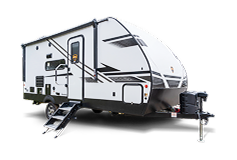
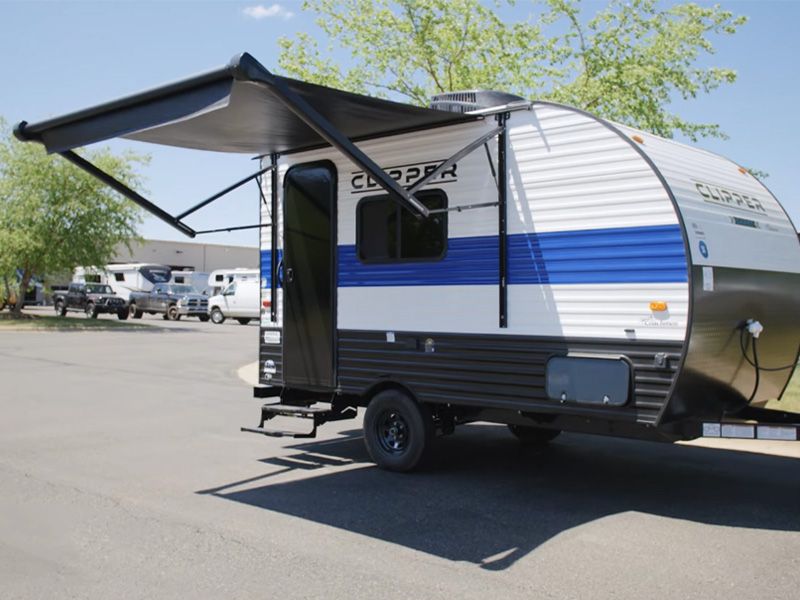
Travel Trailer
Bumper-pull design that hitches to a receiver behind the tow vehicle.
- + Tows behind SUVs, half-ton trucks and some vans
- + Wide range of lengths and floor plans
- + Keeps the full bed of a pickup free
- + Lower entry cost than most fifth wheels
- • Needs a weight-distributing hitch + sway control
- • Tongue weight ~10–15% of loaded weight
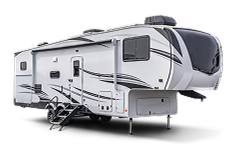
Fifth Wheel
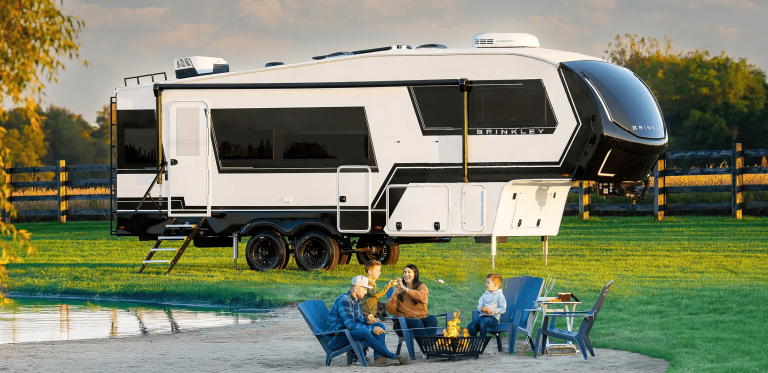
Connects to a hitch mounted in the bed of a pickup truck over the rear axle.
- + More stable, less prone to sway
- + Higher capacity and more living space
- + Tighter turning radius than a long bumper-pull
- • Requires a pickup — often ¾ or 1-ton
- • Pin weight ~15–25% of loaded weight
- • Uses the truck bed for the hitch
Making The Connection
Hitch Types Explained
The right hitch keeps your rig level, balanced and controllable. Match the hitch to your trailer style and weight.
Weight-Distributing Hitch
Travel trailers & bumper-pullUses spring bars to transfer tongue weight forward across the tow vehicle’s front axle and back to the trailer axles. Restores steering, braking and level ride. Strongly recommended for most travel trailers over ~5,000 lb, ideally paired with sway control.
Fifth-Wheel Hitch
Fifth wheelsMounts in the truck bed over the rear axle and connects to the trailer’s kingpin. Places the load ahead of the axle for outstanding stability, higher capacity and tighter turning than a bumper pull.
Gooseneck Hitch
Heavy toy haulers & commercialA ball mounted in the truck bed that couples to a trailer’s gooseneck coupler. Common on the heaviest trailers; some fifth wheels use a gooseneck adapter. Frees up bed space when not in use.
Standard Ball / Receiver
Light pop-ups & small campersA simple receiver hitch with a ball mount. Fine for light pop-ups, teardrops and small campers within the receiver’s Class rating, but lacks weight distribution and sway control for larger trailers.
On The Road
Towing Safety Tips
Match your safety chains & brakes
Cross safety chains under the coupler and confirm your trailer brake controller is set correctly before every trip.
Check tire pressure & ratings
Cold-inflate all truck and trailer tires to spec, and make sure trailer tires are rated (load range) for the loaded weight.
Load 60/40 and low
Put roughly 60% of cargo weight ahead of the trailer axles and keep heavy items low to maintain proper tongue weight and prevent sway.
Use sway control
Wind, passing trucks and downhill grades induce sway. Friction or integrated sway control and a well-set weight-distributing hitch keep the rig planted.
Slow down and brake early
Longer stopping distances mean you should reduce speed, increase following distance and use engine/tow-haul mode on descents.
Do a pre-trip walkaround
Lights, coupler latch, hitch pin, breakaway cable, mirrors and awning locks — a two-minute check prevents most roadside problems.
Cheat Sheet
Quick Reference Chart
Typical pairings to point you in the right direction. Always confirm the exact ratings for your specific vehicle and RV.
| RV Type | Typical Loaded Weight | Suggested Tow Vehicle | Hitch |
|---|---|---|---|
| Pop-up / Teardrop | 1,500 – 3,500 lb | Crossover, SUV, minivan | Standard ball / receiver |
| Small Travel Trailer | 3,000 – 5,000 lb | Mid-size SUV or half-ton | Weight-distributing |
| Large Travel Trailer | 5,000 – 8,500 lb | Half-ton to ¾-ton pickup | Weight-distributing + sway |
| Fifth Wheel | 9,000 – 16,000 lb | ¾-ton to 1-ton pickup | Fifth-wheel hitch |
| Toy Hauler | 10,000 – 18,000+ lb | 1-ton pickup (dually for heaviest) | Fifth-wheel or gooseneck |
Common Questions
Towing FAQ
Should I use dry weight or GVWR to size my tow vehicle? +
Always plan around GVWR. Dry weight is the empty factory number and ignores water, propane, batteries, gear and passengers — which can add 1,000–2,000+ lb. Sizing to GVWR keeps you safe and legal even when the trailer is fully loaded.
What’s the difference between towing capacity and payload? +
Towing capacity is how much the vehicle can pull behind it; payload is how much weight the vehicle can carry, including tongue or pin weight. Many trucks run out of payload long before they run out of tow rating, so both must be checked.
Do I need a special truck for a fifth wheel? +
Fifth wheels connect to a hitch in the truck bed, so you need a pickup — typically a ¾-ton or 1-ton for larger units, because pin weight (15–25% of trailer weight) counts heavily against payload.
What tongue weight should I aim for? +
For a bumper-pull travel trailer, target 10–15% of the loaded trailer weight on the tongue. Too little causes dangerous sway; too much overloads the hitch and rear axle.
Can an SUV tow a travel trailer? +
Many SUVs can tow small to mid-size travel trailers and pop-ups. Confirm the specific tow and payload ratings for your trim, and use a weight-distributing hitch with sway control for anything over roughly 5,000 lb.
Important — Verify Before You Tow
This guide is educational and provides general figures only. Towing capacities, payload and weight ratings vary widely by make, model, trim, engine, axle ratio and options. Always confirm the exact ratings for your specific vehicle with your owner’s manual, the door-jamb sticker and your vehicle manufacturer or dealer before towing. Caravan AVM is not responsible for towing decisions made from these general guidelines.
Find An RV That Fits Your Tow Vehicle
Every unit lists its weights so you can pair with confidence. Not sure? Our team will help you match the right RV to your truck — and deliver it door-to-door to all 50 states.
Call 1 (888) 626-7576 or email info@caravanavm.com — Mon–Sat 9AM–7PM CT, Sun by appointment.